
In 2024, the PWA donated $30K to the Nature Conservation of Canada for the acquisition of a property at Gates Creek. The balance of the funds needed were realized in 2024 and the property was brought into permanent conservation.
Gates Creek Conservation Area was first conserved in 2021 and in 2024 the Nature Conservancy of Canada (NCC) acquired a neighbouring property, expanding the conservation area to 130 hectares of protected lands for a wide diversity of wildlife, and safeguards precious freshwater habitats. Gates Creek is located in the territory of the St’at’imc people, adjacent to N’Quatqua First Nations reserve lands near the town of D’Arcy.
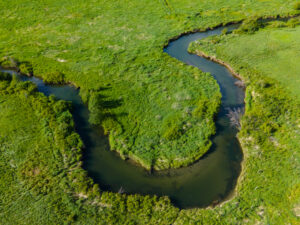
 Gates Creek sits on a low floodplain that is fed by an underground aquifer. Wetland and riparian areas provide habitat for many rare and important plants, amphibians, birds and mammals.
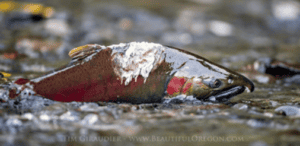
Gates Creek supports several fish species of conservation, cultural and /or economic importance. Sockeye, coho, chinook and pink salmon migrate up from the Fraser River, through the Fraser Canyon and Hell’s Gate, and finally through Seton and Anderson lakes into Gates Creek.
Bull trout, Dolly Varden, kokanee, lake trout, mountain whitefish and rainbow trout are all found in this waterway.
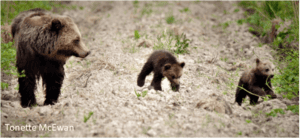
Wetlands along Gates Creek support a wide range of waterfowl, amphibians, reptiles, insects and other aquatic organisms. In addition to important aquatic habitat, Gates Creek Conservation Area protects part of a high-quality wildlife corridor for grizzly bears travelling across the valley, preserving a crucial linkage between two isolated and threatened grizzly bear populations.

The restoration project will rehabilitate wetland and streamside areas that are used by a diversity of fish, birds, insects and other wildlife. The initial phase will focus on installing woody debris to create microhabitats and increase channel complexity, planting native vegetation along the creek to re-establish stream cover and floodplain canopy, and suppressing invasive reed canary grass.
 The Nature Conservancy of Canada (NCC) partnered with the Fish & Wildlife Compensation Program (FWCP) to conserve Gates Creek in 2021 and expand it in 2024. Prior to this partnership, FWCP had provided the funds to purchase the land with the aim of finding a long-term conservation solution for the ecologically important area. NCC was able to step up and assume ownership and long-term management of the conservation area.
FWCP’s Coastal Region contributed to an endowment fund that will enable the long-term stewardship of the conservation area. Additional funding for the conservation and restoration of Gates Creek was provided by the Government of Canada through the Natural Heritage Conservation Program, part of Canada’s Nature Fund, the U.S. Fish and Wildlife Service, TELUS Communications, Habitat Conservation Trust Foundation, the Longhedge Foundation and the Pemberton Wildlife Association.